In California two people need a minimum of THREE things* to be married in a legally binding ceremony.
The official site for California legislative information states that California Law consists of 29 codes, covering various subject areas, the State Constitution and Statutes. The subject area that marriage law falls under is known as the California Family Code.
California Family Code states "Marriage is a personal relation arising out of a civil contract...to which the consent of the parties capable of making that contract is necessary. Consent alone does not constitute marriage. Consent must be followed by the issuance of a license and solemnization..." (see California Family Code, Section 300. (a) ).
In other words -
1) VOWS - "No particular form for the ceremony of marriage is required for solemnization of the marriage, but the parties shall declare, in the physical presence of the person solemnizing the marriage and necessary witnesses, that they take each other as husband and wife." (Section 420. (a) )
2) MARRIAGE LICENSE - "Before entering a marriage, or declaring a marriage... the parties shall first obtain a marriage license from a county clerk." (Section 350. (a) )
3) OFFICIANT - "Although marriage is a personal relation arising out of a civil, and not a religious, contract, a marriage may be solemnized by any of the following who is 18 years of age or older: A priest, minister, rabbi, or authorized person of any religious denomination." (Section 400 (a) )
It goes on to state that judges, justices, magistrates; retired judges, justices and magistrates; and " A legislator or constitutional officer of this state or a Member of Congress who represents a district within this state, while that person holds office" are also qualified to solemnize marriages.

SO...if you need help with your marriage vows, assistance getting a marriage license, or want a qualified, trained, experienced person to officiate your ceremony, please contact A Non-Denominational Ceremony! Thank you!!!
1) VOWSThat's IT! This means you don't need rings or dowries or other gifts, nor do you need groomsmen, bridesmaids or cake. In fact, you don't even need to kiss!
2) MARRIAGE LICENSE
3) OFFICIANT
The official site for California legislative information states that California Law consists of 29 codes, covering various subject areas, the State Constitution and Statutes. The subject area that marriage law falls under is known as the California Family Code.
 |
| Inclusive, modern LGBT wedding officiant. (Photo ©LilyRo) |
California Family Code states "Marriage is a personal relation arising out of a civil contract...to which the consent of the parties capable of making that contract is necessary. Consent alone does not constitute marriage. Consent must be followed by the issuance of a license and solemnization..." (see California Family Code, Section 300. (a) ).
In other words -
What must you do or say at your wedding?
1) VOWS: There must be a couple, two individuals over the age of eighteen. The parties being married need to declare out loud that they take the other person as their husband or wife.
1) Vows.

What must you have or get to be married?
2) MARRIAGE LICENSE: You need to obtain a document that permits you to marry, also known as a marriage license. Most marriage licenses are obtained by the couple in person from a county clerk-recorder office. Some other qualified people and notaries can also issue marriage licenses.
*Please note, there are two different kinds of marriage licenses in California: PUBLIC and CONFIDENTIAL. Please see my previous post to learn the difference between a public and confidential marriage license in California. If you choose to get the public marriage license, you are required to have one, no more than two, witnesses over the age of 18. So, depending on the type of your marriage license, you may need 3 1/2 things to be married in California...
2) Marriage license.

Who is allowed to marry you?And, in case you don't believe it's that simple, these references are straight out of the CA Family Code website:
3) OFFICIANT: In short, clergy people, judges, public government representatives, and deputized individuals are allowed to perform a legal marriage ceremony.
3) Qualified officiant. (Photo ©Tara Sielig)

1) VOWS - "No particular form for the ceremony of marriage is required for solemnization of the marriage, but the parties shall declare, in the physical presence of the person solemnizing the marriage and necessary witnesses, that they take each other as husband and wife." (Section 420. (a) )
2) MARRIAGE LICENSE - "Before entering a marriage, or declaring a marriage... the parties shall first obtain a marriage license from a county clerk." (Section 350. (a) )
3) OFFICIANT - "Although marriage is a personal relation arising out of a civil, and not a religious, contract, a marriage may be solemnized by any of the following who is 18 years of age or older: A priest, minister, rabbi, or authorized person of any religious denomination." (Section 400 (a) )
It goes on to state that judges, justices, magistrates; retired judges, justices and magistrates; and " A legislator or constitutional officer of this state or a Member of Congress who represents a district within this state, while that person holds office" are also qualified to solemnize marriages.
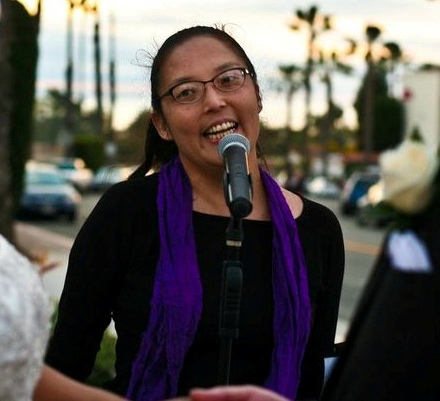
SO...if you need help with your marriage vows, assistance getting a marriage license, or want a qualified, trained, experienced person to officiate your ceremony, please contact A Non-Denominational Ceremony! Thank you!!!


 Posts
Posts


